
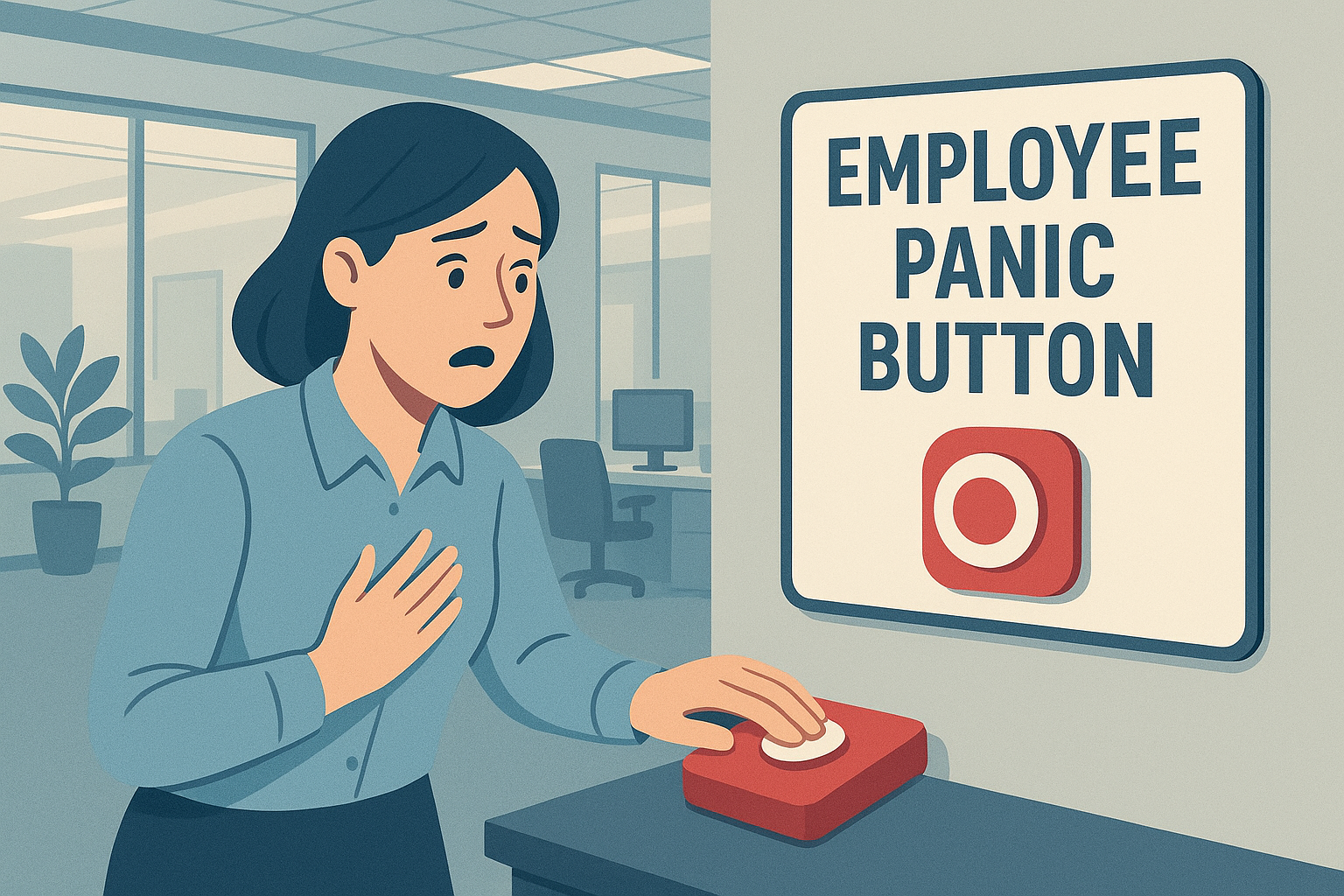
Employee safety is a top priority for every business. While surveillance cameras, access control, and alarm systems form the foundation of workplace security, organizations are increasingly turning to panic button alarm systems—also known as duress alarm systems—to provide an added layer of protection. These discreet yet powerful tools give employees the ability to instantly alert security teams or emergency responders in the event of a threat, accident, or emergency.
What Are Panic Button and Duress Alarm Systems?
A panic button alarm system (or duress alarm system) is designed for rapid response. Devices can be fixed (mounted under desks, walls, or counters) or portable (wearables, key fobs, or mobile app-based solutions). When activated, they immediately notify security personnel, management, or monitoring centers that an employee is in distress.
Unlike traditional alarms, these systems allow silent or discreet activation, ensuring help can be summoned without escalating the situation.
Why Panic Button/Duress Alarm Systems Are Essential
- Instant Emergency Communication – In high-stress situations such as robbery attempts, workplace violence, or medical emergencies, every second counts. Alarm systems allow employees to bypass calling 911 and directly signal for help.
- Discreet Protection – Silent activation means staff can request assistance without drawing attention—critical during a hold-up at a retail location or bank.
- Coverage for Vulnerable Areas – Businesses with late-night shifts, isolated workspaces, or public-facing staff benefit from giving employees a direct lifeline to security.
- Peace of Mind – Beyond their functionality, panic button and duress alarm systems help employees feel safer and more confident, improving morale and productivity.
Common Use Cases by Industry
- Retail & Banks – Discreet alerts during robberies or hostile customer interactions.
- Healthcare Facilities – Immediate backup for violent patients or medical crises.
- Schools & Campuses – Quick response to intruders or student safety threats.
- Corporate Offices – Enhanced safety in lobbies, HR departments, and executive offices.
- Warehouses & Manufacturing – Fast reporting of accidents or hazards when supervisors aren’t nearby.
Integration with Broader Security Systems
Modern duress alarm systems can be integrated into existing security infrastructure. When triggered, they can:
- Notify on-site security teams.
- Alert remote monitoring centers.
- Activate nearby surveillance cameras for real-time tracking.
- Dispatch emergency responders directly.
This integration ensures faster, coordinated responses—reducing risks to employees and minimizing liability for businesses.
Best Practices for Implementation
- Strategic Placement – Install fixed panic buttons in reception areas, cash-handling stations, and private offices.
- Employee Training – Ensure staff understand how and when to use alarm systems.
- Routine Testing – Regularly confirm functionality of all devices.
- Right Solution Selection – Choose between hardwired buttons, mobile apps, or wearables based on your environment.
Protecting Employees with Panic Button and Duress Alarm Systems
Though small in size, these systems play an enormous role in workplace safety. A panic button alarm system or duress alarm system provides instant, discreet access to help when it’s needed most. By investing in these solutions, businesses show a commitment to employee safety and demonstrate proactive risk management.
Contact us today to learn how we can design and implement a panic button/duress alarm solution tailored to your workplace.