
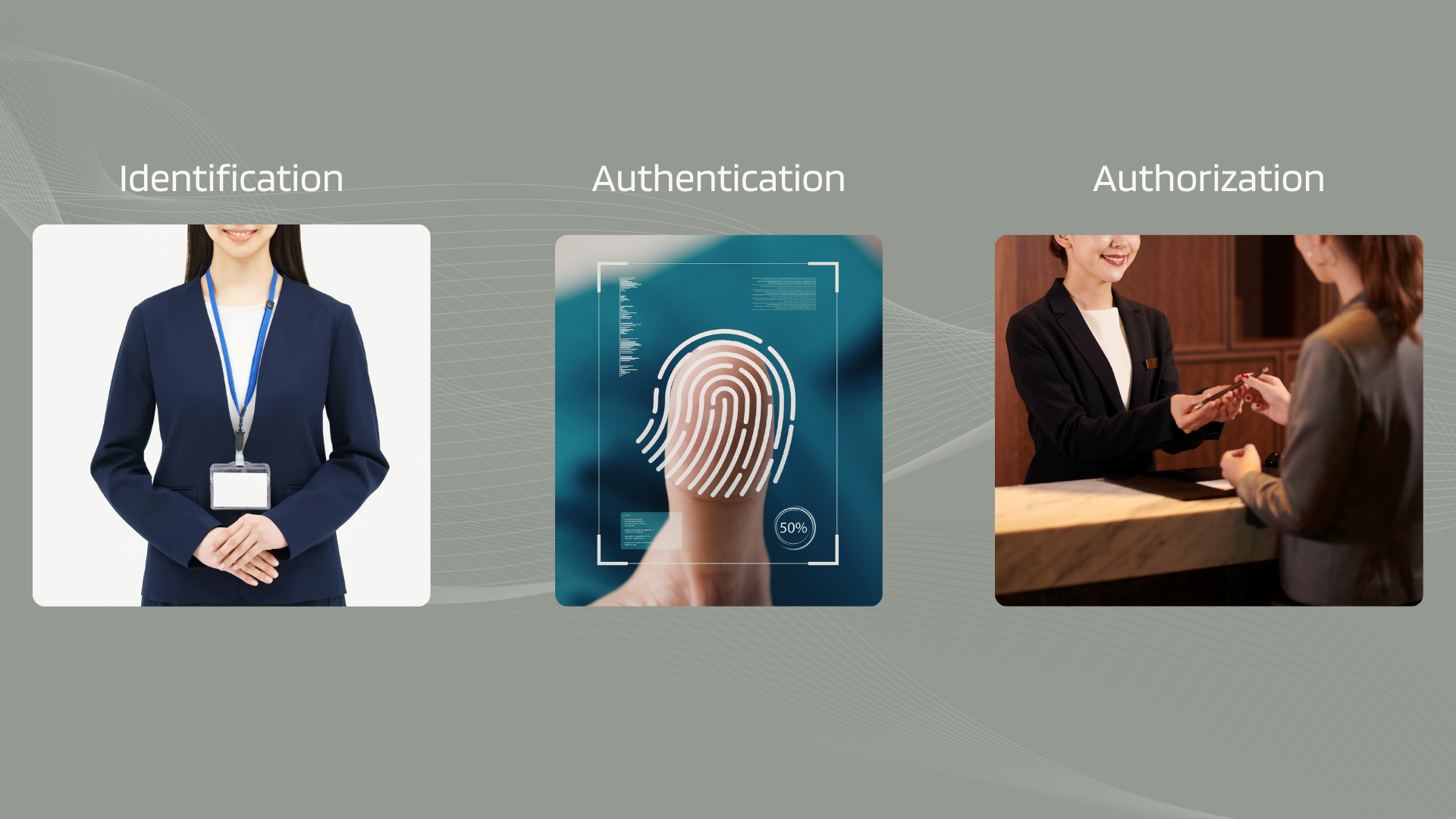
In today’s security landscape—where organizations must protect both physical spaces and digital systems—understanding the fundamentals of identity is more important than ever. Three core concepts form the backbone of modern security strategies: identification, authentication, and authorization.
While these terms are often used interchangeably, they each play a distinct role in ensuring that only the right individuals gain access to the right resources at the right time.
Let’s break down what each one means, how they work together, and why they matter for ID and access control systems.
What Is Identification?
Identification is the first step in the security process. It answers a simple question:
“Who are you?”
At this stage, a user claims an identity. In physical security, this could be:
- Presenting an ID badge
- Swiping a proximity card
- Entering a username
The system doesn’t yet verify whether the identity is valid—it simply recognizes that a claim is being made.
Example:
An employee taps their ID card at a door reader. The system reads the card number and identifies the individual associated with that credential.
What Is Authentication?
Authentication is the process of verifying that the person claiming an identity is who they say they are.
“Can you prove it?”
This step ensures the identity is legitimate by requiring one or more verification factors:
- Something you have (ID card, smart card, mobile credential)
- Something you know (PIN or password)
- Something you are (biometric data like fingerprint or facial recognition)
Example:
After tapping an ID card, the system may require the user to enter a PIN or scan a fingerprint to confirm their identity.
This is where security becomes stronger—especially when using multi-factor authentication (MFA).
What Is Authorization?
Authorization happens after authentication and determines what the verified user is allowed to do.
“What are you allowed to access?”
Even if someone is successfully authenticated, they should only have access to specific areas or systems based on their role.
Example:
- An employee may have access to the main office but not the server room
- A manager may have extended access to restricted areas
- A visitor may only access designated entry points
Authorization ensures that access is controlled and limited appropriately.
How They Work Together
These three steps form a sequence:
- Identification – User claims an identity
- Authentication – System verifies the identity
- Authorization – System grants appropriate access
Without all three working together, security gaps can emerge.
Real-World Scenario:
An employee uses a smart ID card to enter a building:
- The system identifies the cardholder
- A PIN or biometric scan authenticates them
- The access control system authorizes entry based on their permissions
This layered approach ensures both security and accountability.
Why This Matters for ID and Security Systems
Understanding these concepts is critical when designing or upgrading any access control or ID card program.
Stronger Security– Relying on identification alone (such as a basic proximity card) can leave systems vulnerable. Adding authentication layers significantly reduces risk.
Better Access Control– Authorization ensures employees, visitors, and contractors only access what they need—nothing more.
Compliance and Accountability– Many industries require strict access tracking. These three steps help create audit trails and enforce policies.
Where ID Cards and Credentials Fit In
ID cards and credentials play a central role in all three stages:
- Identification: Card numbers and encoded data identify users
- Authentication: Smart cards, PINs, and biometrics verify identity
- Authorization: Access control systems assign permissions based on the credential
Modern solutions—such as smart cards and mobile credentials—enhance both authentication and authorization capabilities, making them essential for secure environments.
Common Mistakes to Avoid
- Confusing identification with authentication– Just because a system recognizes a credential doesn’t mean it’s secure
- Relying on single-factor authentication– One layer of security is often not enough
- Over-permissioning users– Giving too much access increases risk
Key Takeaways
Identification, authentication, and authorization are the foundation of any effective security strategy. Together, they ensure that individuals are not only recognized, but verified—and only granted access to what they truly need.
As security threats continue to evolve, organizations must move beyond basic identification and adopt layered, identity-based approaches that combine strong authentication with precise authorization.
Strengthen Your Identity Strategy
Whether you’re implementing a new ID system or upgrading an existing one, understanding these three concepts is key to building a secure and scalable solution.
By combining the right credentials, access control technologies, and security practices, organizations can protect their people, assets, and information—starting with identity.
If you’re ready to strengthen your identity strategy or need guidance on the right solutions for your organization, contact us today. Our experts are here to help you design and implement a secure, scalable system tailored to your needs.