
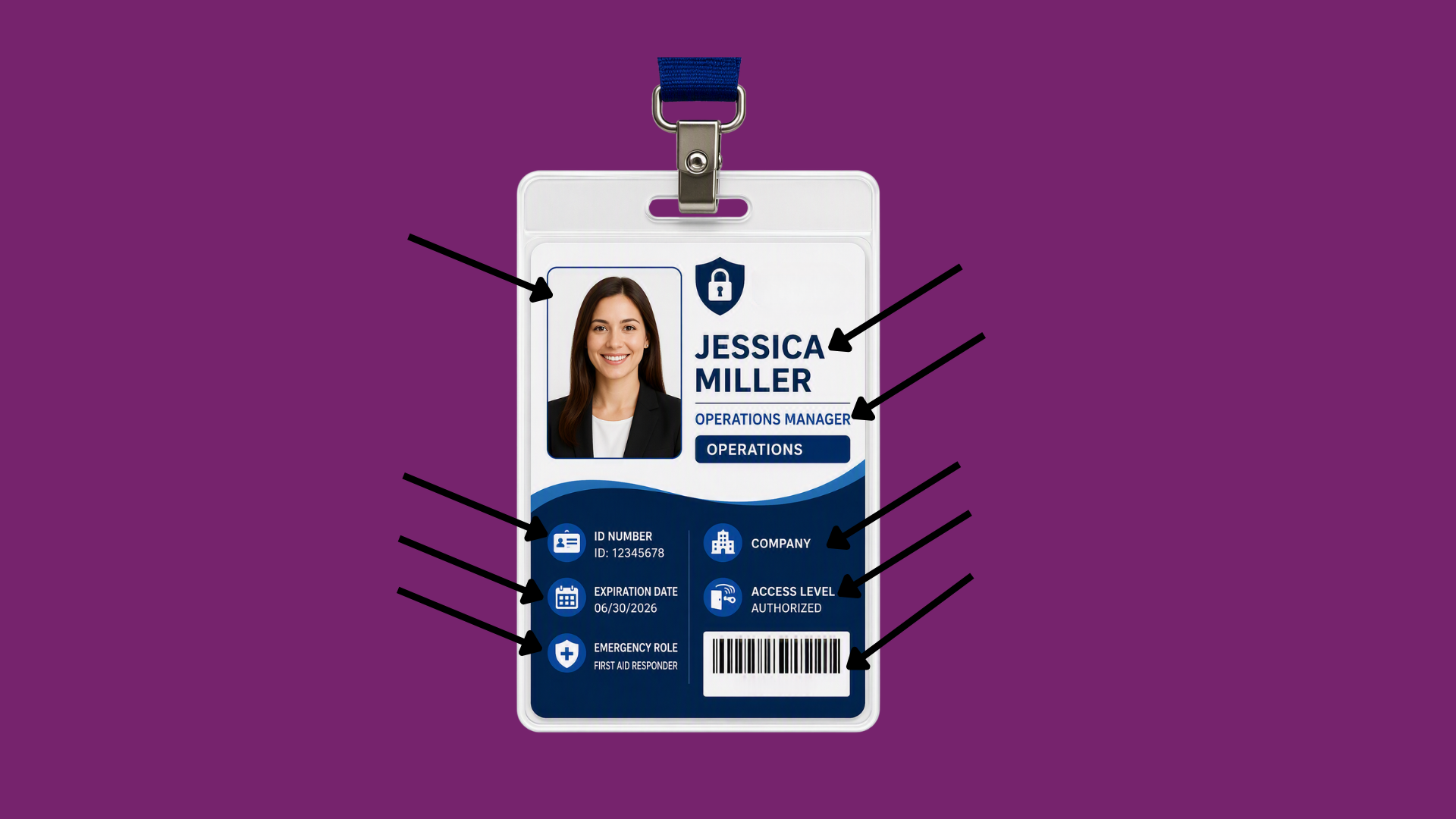
Employee ID badges do more than identify employees—they can also support workplace security, access control, and employee safety. A well-designed badge provides enough information to quickly identify the person wearing it while avoiding unnecessary personal details. When creating an employee badging program, businesses should consider what information is useful for identification, security, and day-to-day operations.
Employee Name
The employee’s name is one of the most important pieces of information on an ID badge. Displaying a first and last name allows employees, visitors, and security personnel to quickly identify who is authorized to be in the facility.
Some organizations may choose to display only an employee’s first name and last initial, depending on their security and privacy requirements.
Employee Photo
A clear, recent photograph helps confirm that the person carrying the badge is the employee to whom it was issued. Photo identification is particularly useful in larger facilities where employees may not know everyone who works there.
For additional security, businesses should establish guidelines for taking consistent employee photos and replacing photos when an employee’s appearance changes significantly.
Job Title or Department
Including an employee’s job title or department can provide helpful context about their role within the organization. This can make it easier for employees and visitors to determine who they need to speak with and can help security personnel identify whether someone should have access to a particular area.
However, businesses should consider whether displaying a specific job title could reveal information that should remain confidential.
Company Name and Logo
The company name and logo clearly establish who issued the badge. Branding also helps distinguish employee credentials from visitor badges, temporary passes, or credentials issued by another organization.
A recognizable company logo can make an employee badge easier to identify at a glance while maintaining a professional appearance.
Access Control Information
For businesses using electronic access control, the badge may contain technology that allows employees to enter authorized doors or areas. Depending on the system, this could include proximity technology, smart-card technology, or another credential technology.
The access technology itself does not necessarily need to be visibly printed on the front of the card. Keeping credential information discreet can make it more difficult for unauthorized individuals to determine how the system works.
Employee ID Number
An employee identification number can help organizations manage credentials within their security and HR systems. Rather than displaying extensive employee information, a unique ID number can provide a simple way to associate the physical badge with the employee’s record.
Whether the number should be printed visibly depends on how the organization uses its badges and its overall security policies.
Expiration Date
For organizations that regularly issue temporary credentials or require employees to renew badges, an expiration date can provide another layer of security. It can help security personnel determine whether a credential is still valid.
Permanent employee badges may not require a visible expiration date, particularly when the electronic credential is managed through the organization’s access control system.
Emergency or Safety Information
Some organizations may benefit from including limited safety-related information on employee badges. For example, a badge could identify an employee as a first-aid responder or another designated emergency role.
However, businesses should carefully consider what information needs to be visible and avoid putting sensitive personal or medical information on an employee’s badge.
What Shouldn’t Be on an Employee ID Badge?
More information isn’t always better. Businesses should avoid putting unnecessary personal information on employee credentials, such as:
- Home address
- Personal phone number
- Social Security number
- Personal email address
- Sensitive employee information
- Other information that could create unnecessary privacy or security risks
The goal should be to provide enough information to identify the employee without exposing information that doesn’t need to be public.
Employee ID Badges Should Be Part of a Larger Security Strategy
An employee ID badge is most effective when it works together with other security measures. Businesses can combine photo identification with access control to help ensure employees can only enter areas they are authorized to access.
When an employee changes roles, loses a badge, or leaves the company, their credential should also be updated or deactivated promptly. Regularly reviewing who has access to the facility can help organizations maintain stronger security over time.
Build a More Secure Employee Badging Program
The right employee ID badge can provide identification while also supporting a company’s overall security strategy. From photo identification and employee information to electronic access credentials, businesses should design badges around their specific security requirements and facility needs.
LINSTAR Security can help businesses evaluate their employee identification and access control needs and develop a security solution designed around their organization. Contact our team today to learn more about creating a secure employee badging program for your business.