
When it comes to securing a facility, most people think of surveillance cameras, alarm systems, or locked doors. But often overlooked is one of the simplest and most powerful tools in any security strategy: the ID card.
Modern ID cards do far more than identify a person—they act as digital keys, access permissions, time-tracking tools, and visual security aids. Whether you’re protecting a school, hospital, government building, or corporate office, ID cards play a central role in controlling access and enhancing safety.
In this blog, we explore how ID cards contribute to physical security and why they’re essential to any access control system.
1. Controlling Access to Restricted Areas
One of the most important functions of ID cards is controlling who can go where. Paired with electronic readers, proximity or smart cards ensure that only authorized personnel can access restricted areas such as server rooms, labs, or executive offices.
Organizations can define access permissions based on roles, departments, time of day, and more. If an employee leaves the company or a contractor’s access is no longer needed, permissions can be instantly revoked—eliminating the security risk of traditional keys.
2. Providing Visual Identification
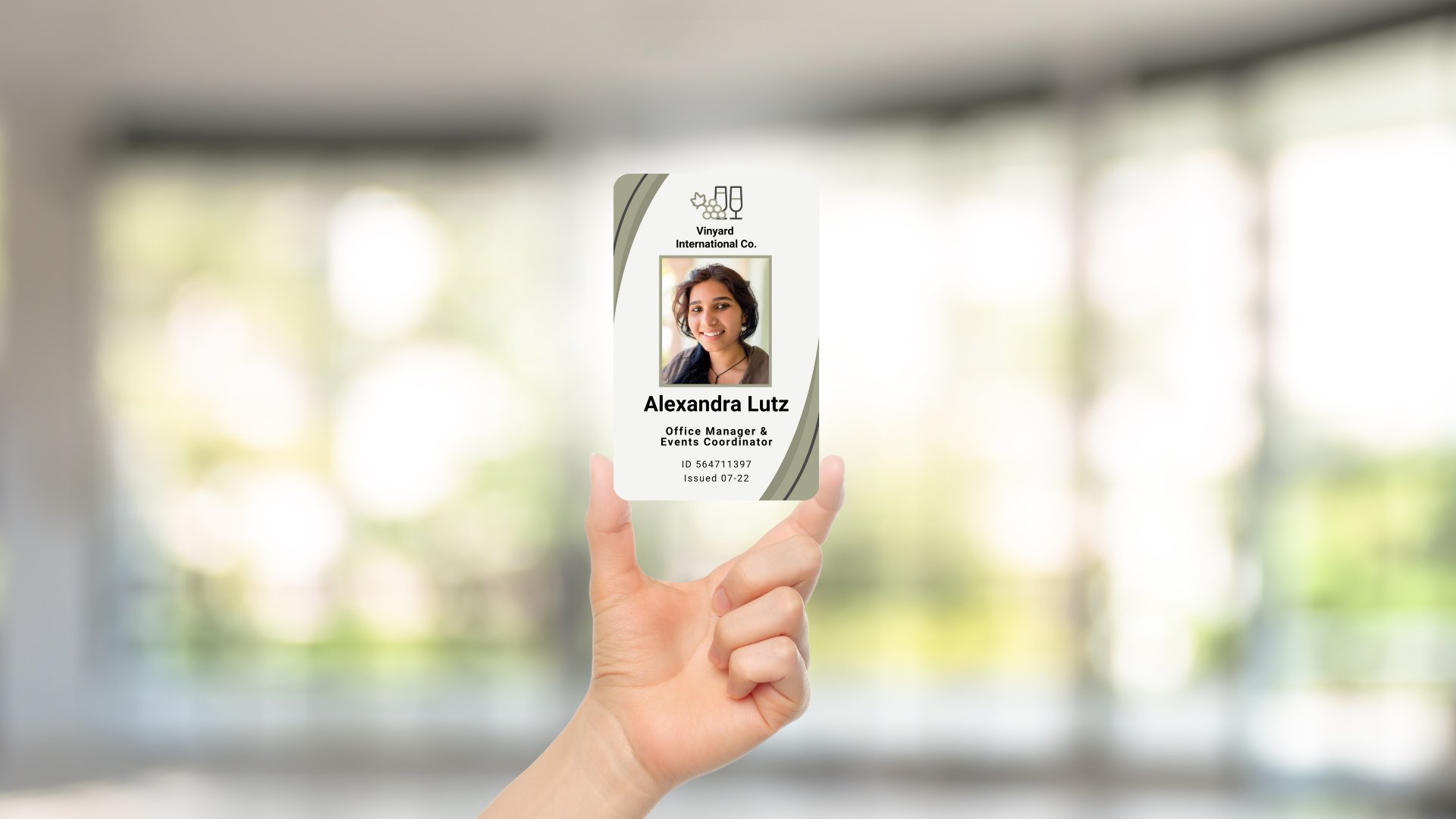
Even in facilities with electronic readers, visual identification remains a key component of security. Printed ID cards typically include:
- The person’s photo
- Full name and job title
- Company logo
- Color-coded background or badge holders for role-based identification
This helps security personnel and other staff quickly verify someone’s identity at a glance—especially in busy or sensitive environments.
3. Supporting Visitor Management
Visitors, temporary contractors, and vendors can be issued temporary ID badges that clearly distinguish them from employees. These cards can include time-based access restrictions and expire after a set period, reducing the risk of misuse.
Paired with a visitor management system, organizations can log who entered, when, and where they went—providing a digital audit trail that improves accountability and supports emergency response efforts.
4. Enhancing Emergency Response
During emergencies such as evacuations or lockdowns, knowing who is in the building and where they are is critical. ID card systems that track entry and exit provide real-time data that can assist first responders.
Some systems also allow for role-based alerting—automatically notifying designated personnel if an unauthorized badge is used or if certain doors are forced open.
5. Strengthening Multi-Factor Authentication (MFA)
For organizations that require higher levels of security, ID cards can be integrated into a multi-factor authentication system. A user might need to present their card and enter a PIN or provide a fingerprint to gain access.
Smart cards can also be used for secure computer logins, ensuring that both physical and digital access is tightly controlled.
6. Logging Activity and Audit Trails
Every time an ID card is used, the event can be logged in your access control system. This data is valuable for:
- Investigating incidents or breaches
- Ensuring compliance with security policies
- Understanding traffic patterns or facility usage
Some industries—such as healthcare, education, and finance—are required to maintain audit trails for compliance, and card-based access systems make this easy to manage.
7. Supporting Remote and Scalable Security
Modern ID card systems can be cloud-based or integrated with mobile credentials, allowing administrators to manage access remotely. This is especially helpful for organizations with multiple locations or hybrid work environments.
Credential management, printing, and revocation can all be handled from a central platform, keeping your security policies consistent and scalable as your organization grows.
Final Thoughts
ID cards are far more than plastic badges—they’re an essential layer of physical security. When used as part of a broader access control system, they enable organizations to manage access, ensure accountability, and protect people and property more effectively.
Whether you’re issuing basic photo IDs or advanced smart cards, it’s important to have a reliable ID card printer and credential management system in place. If you’re looking to improve your facility’s security or upgrade your ID card solution, our experts can help you find the right fit.
Contact us today to learn how you can strengthen your security with ID card solutions tailored to your organization.